

The Hidden Buyer Problem (And How to Solve It)
Why your advertising and sales calls miss the decision-makers who can kill your deals

The Marketing Brief
July 29, 2025 • Issue 3
The big thing
Your advertising and sales calls aren't reaching the people who can actually kill your deals. Hidden decision-makers, like CFOs, legal counsel, and procurement managers, represent a massive blind spot in B2B marketing. They have veto power over purchases. But they also avoid sales calls and traditional marketing. So, you need a reliable way to reach them. That’s where thought leadership content comes in.
Why it matters
Here's the problem everyone's solving wrong: Most companies think thought leadership requires academic-level content, extensive research, and massive resources. So, they either don't do it at all or create overly complex content that nobody reads.
The reality: Simple, human insights that challenge thinking dramatically outperform elaborate, formal content. You don't need a PhD to influence hidden buyers. You need genuine insights presented in a clear and accessible way.
The details
Source: 2025 Edelman-LinkedIn B2B Thought Leadership Impact Report - survey of nearly 2,000 management-level professionals across various industries and company sizes
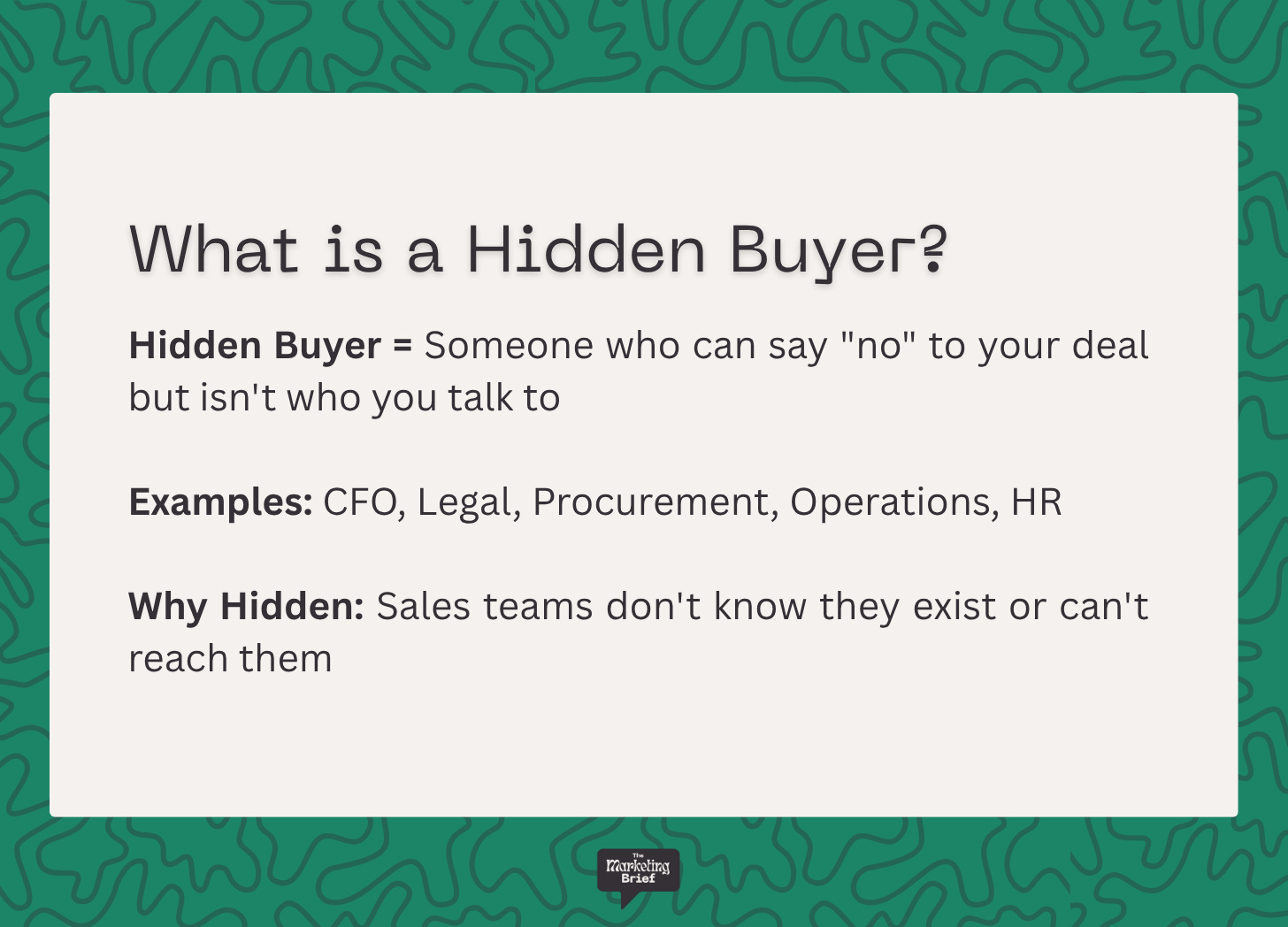
Hidden Buyers are more powerful than you realize
These people spend serious time consuming thought leadership (over an hour per week), but most have zero contact with a salesperson or team. There’s more: they're way more likely to champion your proposal in RFP processes if you've impressed them with smart content. Think of thought leadership as your backdoor into conversations you'd never get invited to otherwise.
They actually prefer simple over sophisticated
Forget the academic approach. Hidden buyers want quick takeaways in a human tone that challenges their thinking rather than validates what they already believe. The "dumb it down" content actually works. Most people want insights they can immediately use, not research papers they'll never finish.
Your ideas can beat their brand recognition
If your thought leadership is genuinely valuable, it matters less how well-known your company is. Hidden buyers trust great insights more than fancy marketing materials. Small companies with smart perspectives can absolutely compete against industry giants. But only if they're actually creating content.
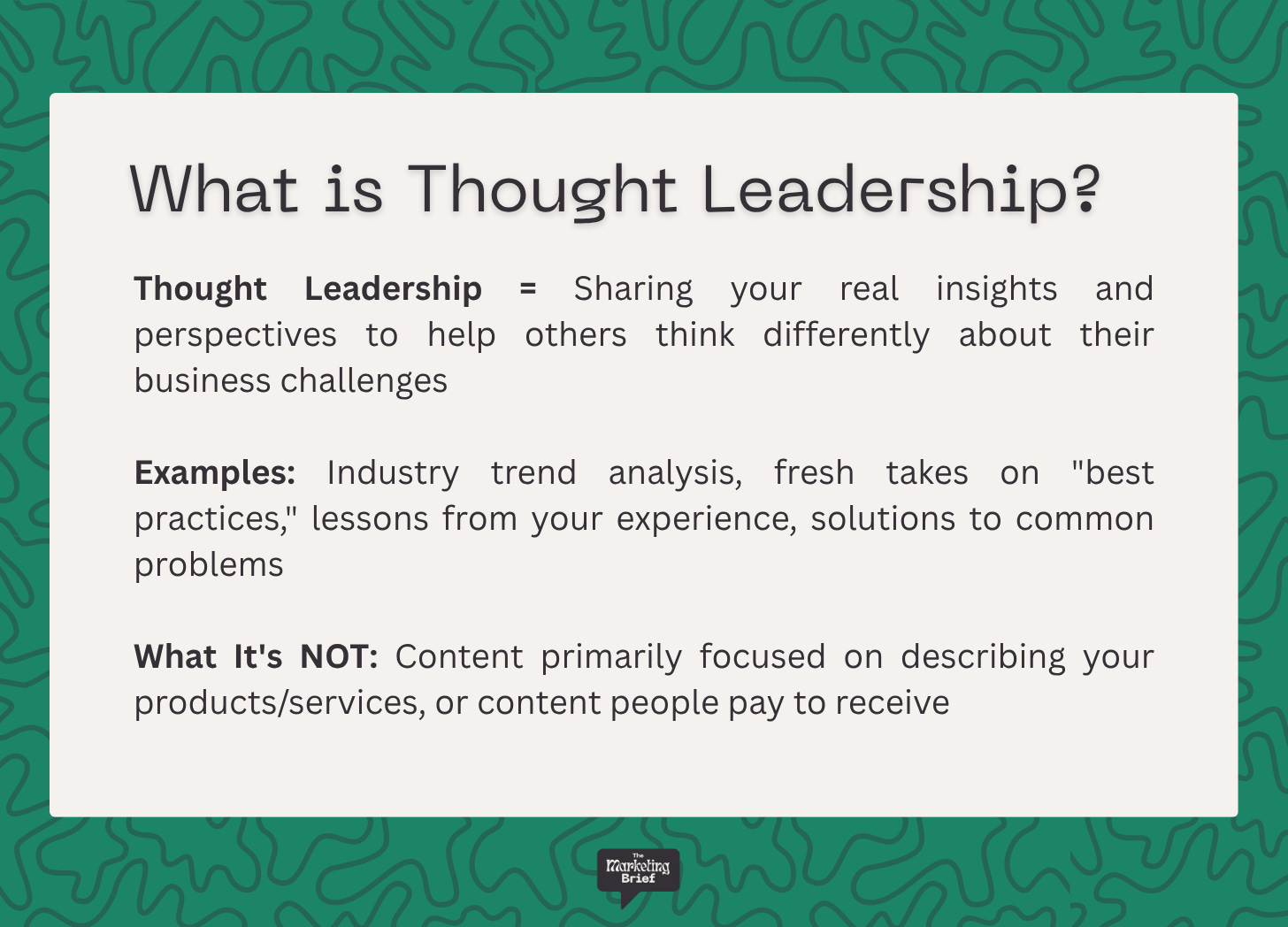
What actually works
Stop overthinking the topics. Focus on:
Business challenges your hidden buyers actually face (not just your product category)
Industry trends that keep them up at night
Strategic insights that make them look smart to their CEO
Unique takes that make people think "I never considered that"
Don’t forget to make it human. Even if you use AI to help refine your ideas, keep it in your voice. They shouldn’t be surprised when you get on a meeting with them.
Action items
If You've Never Posted: Start Here
Open LinkedIn right now and find 3 posts about business challenges (budget cuts, compliance changes, operational efficiency), and add your perspective in the comments
Next week, share one observation from a recent meeting, call, or conversation that surprised you
That's it. Don’t overthink it. Don't plan a content calendar. Don't write 10 posts in advance. Just start the conversation.
If You're Already Posting: Level Up
Before your next post, ask yourself: "Would this be interesting to someone who doesn't buy my product but could block the sale?"
Try this format: "Everyone thinks X, but I'm seeing Y instead. Here's why..."
End with a question that makes people think, not just agree
If You Want to Outsource: Don't. Yet.
The magic happens when it's actually your thinking. But you can make it easier:
Voice-memo your thoughts after client calls and have someone turn them into posts
Share your real reactions to industry news instead of creating "original" content from scratch
Use your existing conversations—that thing you explained to three different people this week? That's your next post.
The 5-Minute Rule
If it takes longer than 5 minutes to decide what to post about, you're overthinking it. The best thought leadership comes from real problems you're actually solving, not content brainstorms.
What's Next
The hidden buyer opportunity is massive and largely untapped. While your competitors struggle with complex thought leadership strategies or skip it entirely, you can capture this influential audience with simpler, more human content that actually provides value.
The question isn't whether you have time for thought leadership, it's whether you can afford to miss the decision-makers your advertising never reaches.
Worth your time
This week:
Lovable.dev - Build a website or app in minutes (if you have a really good prompt). I haven’t developed any use cases yet. Interested? Ping me.
Skip this:
Being the expert - A gentle reminder: being a thought leader doesn’t mean you have to show up as the know-it-all. The guru. The expert. When you show up as you, with what you’ve learned or are learning along the way, people will come along for the ride. (We crave realness on social media!)
Currently reading
Two things you need to know about me and books:
I read at least 3 books at once.
I’m a vibe reader.
Current vibe: Cute, ridiculous, fantasy + 4 other books
Assistant to the Villain by Hannah Nicole Maehrer
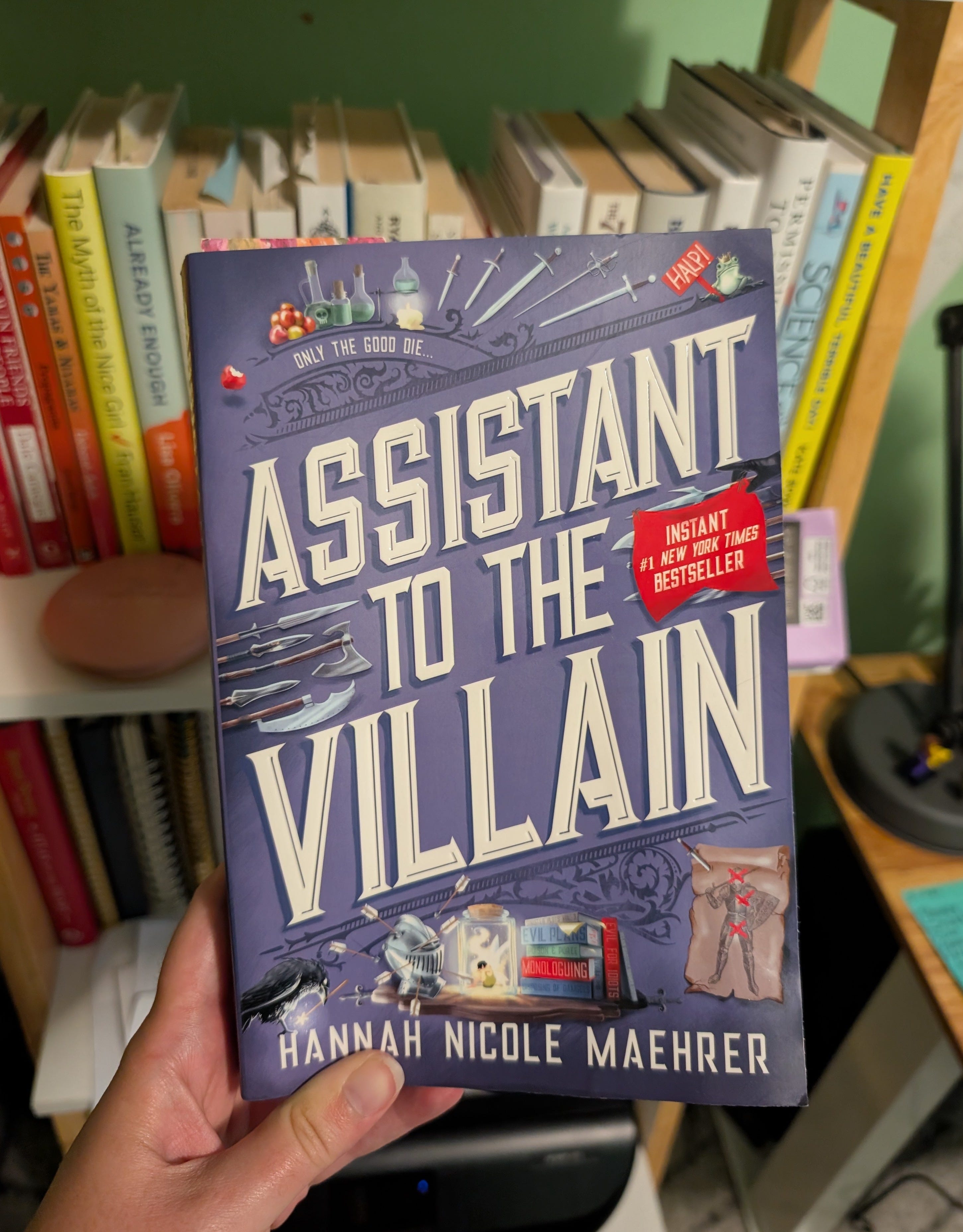
What’s on your nightstand?
Lyndee
P.S. August is a month of trips, days off, school panic, and sweet corn. Some of those things are more exciting than others. What are you up to in August?